Azure Activity Monitoring and Incident Investigation with Microsoft Sentinel
I built an Azure monitoring workflow, tested a Sentinel detection, and followed controlled activity from source logs through incident resolution.
Completed lab
- Technologies
- Microsoft Azure, Microsoft Sentinel, Log Analytics, KQL, Microsoft Defender
Explore the full project on GitHub ↗Setup notes, lab journal, and original evidence.
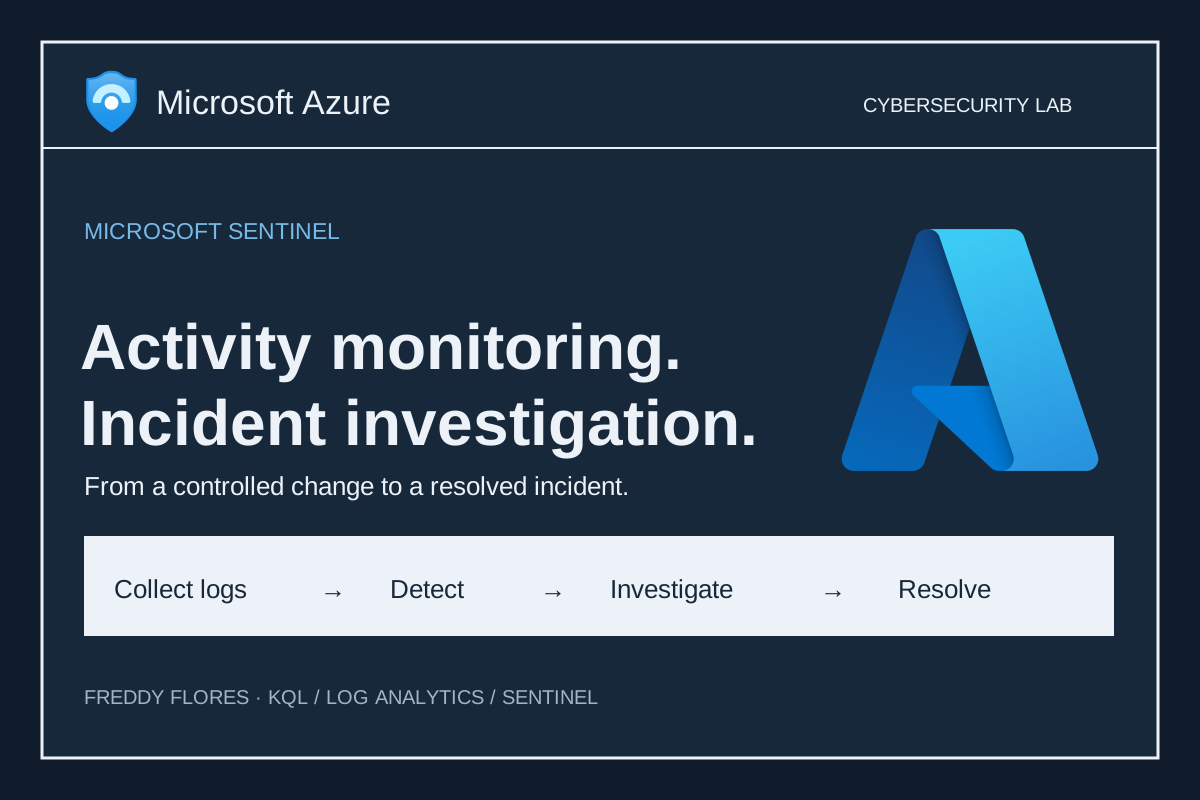
From a cloud change to a resolved incident
After passing AZ-900, I built this lab to practice cloud security monitoring. I made intentional tag changes on my own Azure resource group, traced them through the logs, and investigated the resulting Microsoft Sentinel alerts. These were controlled learning exercises, not malicious activity.
What I did
- Connected the logs: I configured Azure Activity export to Log Analytics and verified the logging policy's managed identity.
- Built a detection: I created and tested a scheduled KQL rule for successful tag changes.
- Investigated the alerts: I compared timestamps and correlation IDs, measured ingestion delays, and mapped the source IP and Azure resource.
- Tuned and resolved: I refined the ingestion-time window, retested, and resolved the final incident as Benign Positive.
What the final test showed
I observed one alert for the fourth controlled tag change during the observation period. The event took about 8 minutes 18 seconds to reach Log Analytics. Following those timestamps helped me understand why earlier tests produced repeated alerts.
This completed exercise covers one operation in one resource group. It does not establish exactly-once detection or include automated remediation.
What I learned
I learned to follow a single event through collection, detection, investigation, and resolution—and to distinguish event time from ingestion and query time. I made the Azure changes and verified the evidence myself, with ChatGPT/Codex support for KQL, troubleshooting, and documentation.
Read the full documentation on GitHub ↗Follow the documented steps, findings, and current limitations.